10 Essential Tips for Installing LED Strip Backlight on TV?

Time:2026-05-28 Author:Amelia
0%

Installing LED strip backlight on the back of your TV can elevate your viewing experience. It enhances picture quality and adds a stylish touch to your setup. However, if you're wondering how to install LED strip backlight on the back of TV, you may feel overwhelmed by the options available.

Navigating through the various products and installation methods requires some insight. Different brands offer unique features. Selecting the right strip that suits your TV size is essential. You want a product that is reliable and performs well, ensuring vibrant colors and effective illumination. Many people overlook the importance of proper placement and tool selection.

Understanding the mounting surface is also critical. The back of your TV may have different textures and materials. Using the wrong adhesive could lead to issues later. Moreover, it is vital to consider cable management for a clean installation. Taking time to plan and execute your installation can prevent common mistakes. This guide will help you navigate these challenges effectively.
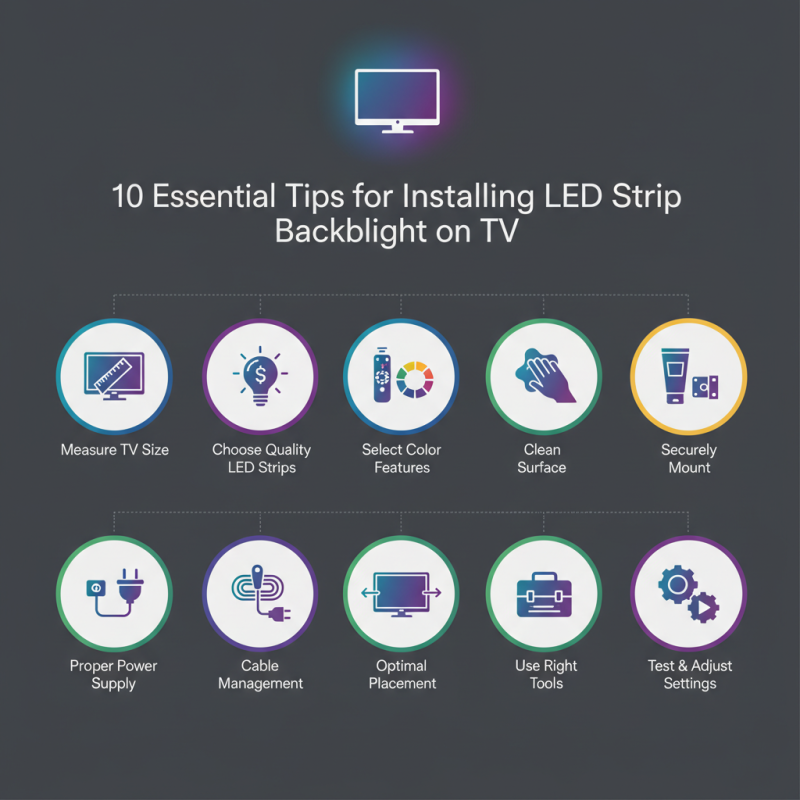
10 Essential Tips for Installing LED Strip Backlight on TV?

Understanding the Benefits of LED Strip Backlighting on TVs

LED strip backlighting can transform your TV viewing experience. The soft glow enhances contrast and depth in images. This feature makes dark scenes more engaging and vivid. It minimizes eye strain during long viewing sessions, which is essential for comfort.

Installing LED strips adds an appealing aesthetic to your setup. They come in various colors and luminosities. However, selecting the right brightness is crucial. Too bright can be distracting. Too dim may not provide adequate illumination. Additionally, the placement of these strips affects the overall effect. Improper positioning can lead to uneven lighting, which can detract from the viewing experience.

Understanding your room's lighting conditions is key. Bright rooms might require higher brightness settings. Dimmer environments may benefit from softer lights. Experimenting with different setups can lead to a more personalized feel. It’s important to remember that while LED backlighting enhances visuals, it may require adjustments to achieve that perfect balance.

Selecting the Right LED Strip Specifications for Your TV Model

When selecting LED strip specifications for your TV model, compatibility is crucial. Not all LED strips are created equal. A report by the Consumer Technology Association highlights that mismatched specifications can cause inadequate brightness or unequal lighting. Therefore, check the TV's specifications before purchasing.

Length matters. Most LED strips come in various lengths. Measure your TV from edge to edge to determine the needed length. A strip that's too short won't cover the area, while one that's too long can create installation challenges. Additionally, pay attention to the LED count per meter. Higher counts offer brighter and more uniform lighting, enhancing your viewing experience.

Power consumption is another key aspect. According to a study from the International Energy Agency, energy-efficient LED strips can significantly lower electricity bills. However, ensure your TV's USB port can provide enough power. Some strips might require external power supplies, which can complicate installation. Balancing energy efficiency and brightness is an essential consideration for a successful setup.

Preparing Your TV and Workspace for Safe Installation of LED Backlights

Before starting the installation of LED strip backlights on your TV, it’s crucial to prepare both your TV and workspace. Clear any clutter from your workspace to ensure a safe environment. Utilize a clean surface to prevent any scratches or damages to your TV. You may also consider using a non-slip mat to avoid accidents during installation. Ensure that your tools are within easy reach. This reduces the risk of mishaps when handling the LED strips.

Check your TV’s connections and power source. Make sure the TV is unplugged before proceeding. Dust off the connectors and the back of the TV to ensure a solid adhesive bond for the LED strips. It’s essential to plan where the LED strip will be placed. Measure your TV to determine the right length of strip you need. Take your time with this step. If you rush, mistakes can happen, leading to wasted materials. Carefully applying the strips will ensure an even spread of light and a better viewing experience.

Don’t attempt the installation alone if you can avoid it. Having an extra set of hands can be beneficial. One person can hold the LED strip in place, while the other completes the wiring. Communication is key here. If one person is unsure, the process can get messy. Also, be mindful of the heat emitted by LED strips. This may affect the adhesive’s performance over time. It's worthwhile to consider those small details to prevent future issues.

Step-by-Step Installation Process for LED Strip Backlighting

Installing LED strip backlighting on your TV can enhance your viewing experience. Start by gathering your tools: a clean workspace, a soft cloth, and scissors. Measure the perimeter of your TV screen for precise cutting of the LED strips. Clean the area where you will apply the strips to ensure proper adhesion.

Next, peel off the backing of the LED strips and press them gently against the edges. It's vital to avoid any twists or overlaps; this step determines the appearance. If the strips are too long, don’t panic. Cut them at designated points and reconnect them as needed. Pay close attention to the connections; they should feel secure yet not overly tight.

Once your strips are in place, connect them to a power source. Test the lights before finalizing the setup. Adjustments may be necessary for optimal lighting effects. Often, the placement may not look perfect at first. Take time to reflect on the arrangement. Light patterns can vary based on the back surface. If the glow appears uneven, consider repositioning your strips for a balanced look. Remember, this is a creative process that may require several adjustments.

Testing and Adjusting LED Strip Backlights for Optimal Viewing Experience

When setting up LED strip backlights for your TV, proper testing and adjustment are crucial. These backlights can enhance contrast and create a dynamic viewing environment. A study from the International Display Performance Standard shows that well-calibrated backlighting can improve perceived brightness by up to 30%.

Consider the color temperature when adjusting LED strip backlights. Most TVs operate well at around 6500K, which mimics natural daylight. However, not everyone's room lighting is the same. Some may find softer or warmer tones more comfortable. Testing different color temperatures can lead to a more personalized viewing experience.

Additionally, take note of the ambient light in your space. A report from the Society for Information Display indicates that over 60% of viewers prefer a brighter environment when watching content with contrasting backlighting. Experimenting with brightness settings is essential. Brightness that is too high can strain your eyes, while too low can wash out colors. Aim for a balance that enhances your entertainment, without causing discomfort.

10 Essential Tips for Installing LED Strip Backlight on TV

Tip No. Tip Description Recommended Length Power Source Color Temperature
1 Choose the right LED strip based on TV size 3-5 meters USB or AC Adapter 3000K to 6500K
2 Measure your TV for exact strip placement N/A N/A N/A
3 Use adhesive or clips for secure installation N/A N/A N/A
4 Test the LED strip before final installation N/A N/A N/A
5 Consider placement for optimal glow N/A N/A N/A
6 Adjust brightness settings according to preference N/A N/A N/A
7 Keep cables organized for a clean look N/A N/A N/A
8 Use a diffuser to soften the light N/A N/A N/A
9 Keep the LED strips away from heat sources N/A N/A N/A
10 Regularly check connections for stability N/A N/A N/A

FAQS

: How do I choose the right LED strip for my TV?

: Check the TV specifications first. Compatibility is crucial for brightness and lighting uniformity.

What should I measure before buying an LED strip?

Measure your TV from edge to edge. Length affects installation and coverage.

How does LED count impact lighting?

Higher LED counts provide brighter, more uniform lighting. This enhances your viewing experience significantly.

Why is power consumption important for LED strips?

Energy-efficient strips cut electricity costs. Ensure your TV can provide enough power for the strip.

What color temperature is optimal for LED backlighting?

A color temperature of around 6500K mimics natural daylight, improving your viewing comfort.

How does ambient light affect viewing with LED backlights?

Many viewers prefer brighter environments. Adjust brightness to balance comfort and color clarity.

How can I achieve the best brightness setting?

Experiment with different brightness settings. Too high can strain your eyes, too low washes out colors.

Do I need to adjust backlight settings for different rooms?

Yes, room lighting affects how backlights appear. Test various settings for a more personalized experience.

What are common installation challenges?

Strips that are too long or require external power supplies can complicate setup. Always plan ahead.

What happens if I choose the wrong LED strip?

Incompatible strips could lead to inadequate brightness or poor lighting. Always verify specifications before buying.

Conclusion

Installing LED strip backlighting on your TV can greatly enhance your viewing experience by improving contrast and reducing eye strain. This article provides essential tips on how to install LED strip backlight on back of TV, starting with understanding the benefits of adding backlighting. You'll learn to choose the right specifications for your TV model and prepare both your TV and workspace to ensure a safe installation process.

The step-by-step installation guide walks you through the entire procedure, making it approachable even for beginners. Finally, the article emphasizes testing and adjusting the LED strip backlights to achieve optimal brightness and color balance, ensuring your new setup boosts your home entertainment while maintaining visual comfort. With these guidelines, transforming your TV setup with LED backlights becomes a straightforward project.


Amelia

Amelia

Amelia is a seasoned marketing professional with a wealth of expertise in our company’s core offerings. With an unwavering passion for driving growth and innovation, she plays a pivotal role in shaping our marketing strategies and enhancing brand visibility. A key aspect of her responsibilities......