Lnb Universal Band Ku is a crucial component in satellite communication systems. It plays a significant role in receiving signals from satellites. According to the Global Satellite Communication Market Report, the industry is projected to grow by 8.5% annually, valuing over $134 billion by 2025. This growth emphasizes the importance of advanced technology like Lnb Universal Band Ku.
Understanding how Lnb Universal Band Ku operates can enhance satellite signal reception. It translates signals from the Ku-band, which varies from 12 to 18 GHz, into usable formats. As the demand for high-definition broadcasting increases, satellite dishes equipped with Lnb Universal Band Ku become essential. They support multiple channels and improved signal quality, catering to both commercial and residential users.
However, not all installations achieve optimal performance. Factors like obstructions, misalignment, and equipment quality can hinder effectiveness. Addressing these issues is vital for maximizing the benefits of Lnb Universal Band Ku. Industry reports emphasize the need for proper installation and maintenance to fully exploit the advantages of satellite technology.
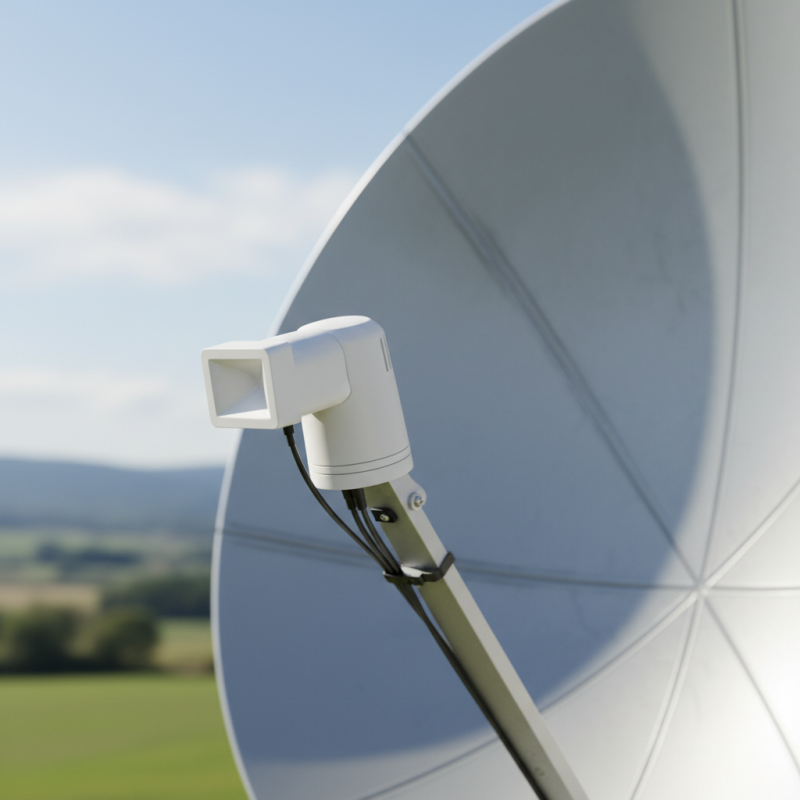
What is an LNB (Low Noise Block converter) Universal Band Ku?
An LNB, or Low Noise Block converter, is a crucial part of satellite receiving systems. The Universal Band Ku type is designed to receive signals in the Ku-band frequency range. It plays a vital role in converting satellite signals for better reception and quality. The LNB collects signals from the satellite dish and processes them before sending the data to a receiver.
The Universal Band Ku LNB can operate across a wide frequency range. This expands the options for satellite channels available to users. It also allows for multiple polarization formats. These features enhance the performance of satellite systems significantly. Signals are converted from high frequency to a lower one that a receiver can process.
Tip: Always install the LNB at the correct angle. This ensures the best signal strength. A small misalignment can lead to a poor connection.
Choosing the right LNB is also important. Not all LNBs are created equal. Some may perform better than others in specific locations. Researching local signal strength can help find the best option.
Tip: Check the weather. Heavy rain or clouds can affect signal quality. A good LNB can mitigate some of these issues, but not all.
Understanding the Frequency Ranges Covered by Ku Band
The Ku band is a key frequency range in satellite communications, spanning approximately 12 to 18 GHz. This frequency band is crucial for various applications, including satellite television, internet services, and weather monitoring. The most commonly used frequencies in the Ku band include 12.2-12.7 GHz for uplinking and 10.7-12.2 GHz for downlinking. This permits efficient transmission of signals over long distances.
Understanding the frequency ranges within the Ku band is vital for optimizing satellite systems. According to industry reports, the Ku band is subdivided into extended and super extended ranges. The extended band, covering 14-14.5 GHz, allows for higher capacity and improved data rates. In contrast, the super extended band reaches up to 18 GHz, providing even better performance. Despite the advantages, these ranges also come with challenges, such as increased susceptibility to rain fade. This phenomenon can disrupt signal quality during heavy precipitation.
Moreover, not all regions benefit equally from these frequencies. Satellite coverage can vary significantly based on geography. In some areas, the reception quality can drop considerably, causing frustration for users. Consequently, understanding the specific frequencies in use can help in maximizing reliability and performance.
How LNB Universal Technology Enhances Satellite Reception
LNB Universal Band Ku is a technology designed to improve satellite reception. It uses two frequency bands to capture signals more effectively. This dual-frequency approach allows for better coverage and signal clarity, especially in challenging conditions.
While installing an LNB, it's crucial to ensure proper alignment. Small misalignments can lead to signal loss. Check the satellite dish's alignment frequently. This simple step can significantly enhance your reception quality.
When setting up, consider the location's obstructions. Trees and buildings can block signals. If you're in a densely populated area, you may need to adjust the dish's angle even more meticulously. Nighttime adjustments might be necessary when some signals are clearer.
Always double-check your connections. Loose cables can result in poor performance. If you notice fluctuations, quickly investigate the setup. Sometimes, it’s the little things that hinder reception. A clean installation can save you future headaches.
The Working Mechanism of LNB in Satellite Communication
The Low-Noise Block Downconverter (LNB) plays a crucial role in satellite communication. It captures signals from satellites and converts them to a lower frequency for easier transmission to receivers. An LNB Universal Band Ku operates within the Ku-band frequency range, typically between 12 GHz to 18 GHz. This band is known for high data throughput and is ideal for services like satellite TV and internet.
The LNB's working mechanism involves several essential components. It includes an antenna that collects the satellite signal. The signal then passes through a low-noise amplifier (LNA) that boosts its strength while minimizing noise. After amplification, the signal is mixed with a local oscillator frequency. This process translates the high-frequency signal into a lower frequency, often between 950 MHz and 2150 MHz. This conversion allows the signals to be easily received and processed by standard satellite receivers.
Tip: Ensure correct alignment of your satellite dish to maximize signal reception. Small shifts can lead to significant signal loss.
While LNBs can enhance communication, they aren’t flawless. Factors like rain, interference, and physical obstructions can degrade signal quality. Regular inspections and adjustments can mitigate these issues. Remember, even minor environmental changes might impact performance.
Tip: Keep the dish clean and free from debris. A dirty dish can cause signal disruptions.
Applications and Uses of LNB Universal Band Ku in Modern Systems
LNB Universal Band Ku is essential in satellite communications. It converts signals from satellites for our devices. This technology is vital for various applications, impacting how we receive data.
In modern setups, LNB Universal Band Ku is widely used in TV broadcasting. It allows users to access a range of channels via satellites. This capability supports high-definition content, enhancing viewing experiences. Additionally, it is crucial for internet service providers offering satellite internet. They rely on this technology to deliver fast, reliable connections in remote areas.
The versatility of LNB also extends to mobile communication. It enables smooth data transfer for smartphones in certain situations. However, users may experience latency issues. Sometimes, equipment can be tricky to install correctly. The technology is powerful, yet it can be sensitive to weather conditions. These factors are worth considering for optimal performance.
FAQS
: An LNB is a Low Noise Block converter used in satellite receiving systems. It processes signals for better reception.
It receives signals in the Ku-band frequency range, improving satellite channel options and performance.
The LNB captures satellite signals, amplifies them, and converts them to a lower frequency for easy transmission.
Ensure the LNB is installed at the correct angle. Small misalignments can lead to poor signal strength.
Heavy rain or clouds can impact signal quality. An LNB can help, but it may not solve all issues.
Physical obstructions, interference, and rain can degrade signal. Regular inspections and adjustments may help.
LNBs are vital for satellite TV and internet. However, users might face latency issues in mobile communications.
Keep the dish clean and free from debris. A dirty dish can disrupt the signal quality significantly.
LNBs can handle a variety of signals across different polarization formats, enhancing reception quality.
Installation can be tricky and sensitive to weather conditions. Proper setup is essential for optimal performance.
Conclusion
The article "What is Lnb Universal Band Ku and How Does it Work?" explores the essential components and functionalities of the LNB Universal Band Ku, a critical device in satellite communication systems. It begins by defining what an LNB (Low Noise Block converter) is and identifies the specific frequency ranges covered by the Ku band, which is crucial for effective satellite signal transmission.
Moreover, the piece delves into how LNB Universal technology significantly enhances satellite reception, ensuring better quality and reliability of the signals received. It further explains the working mechanism of the LNB in the context of satellite communication, detailing its role in converting satellite signals for television or data services. Finally, the article discusses various applications and uses of the LNB Universal Band Ku in modern satellite systems, underscoring its importance in today's communication landscape.

 Junhengtai Electronic