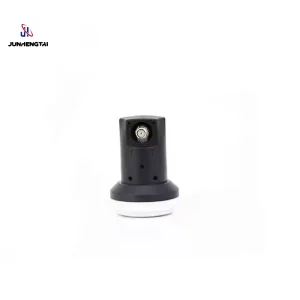
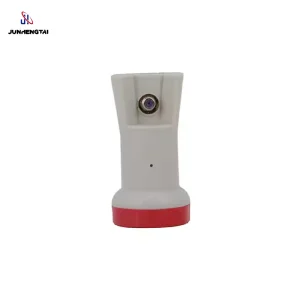
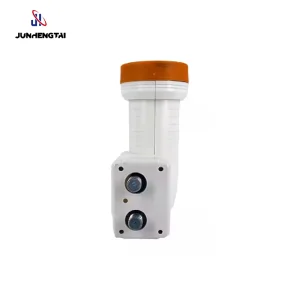
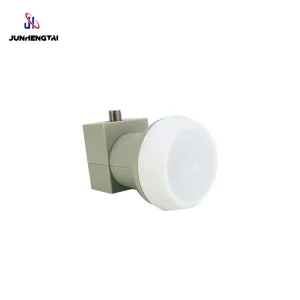
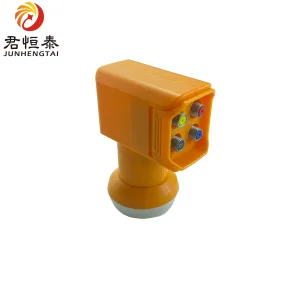
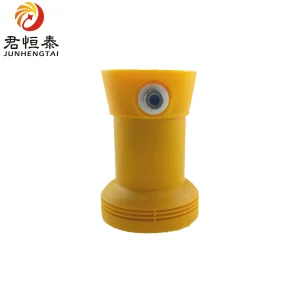
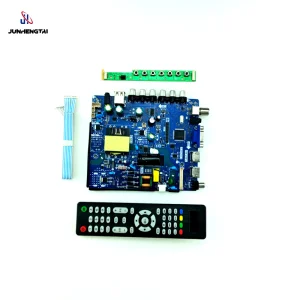
High-performance LNB components engineered to withstand extreme temperatures, desert winds, and off-grid conditions across South Sudan.
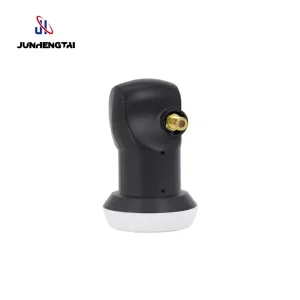
South Sudan, one of the youngest and most dynamically developing nations in East Africa, faces unique challenges in establishing robust telecommunications infrastructure. Traditional fiber optic and terrestrial copper line installations are limited primarily to major urban hubs such as Juba, Malakal, and Wau. Across vast, remote rural expanses, direct-to-home (DTH) satellite systems serve as the lifeline for information exchange, government communications, public broadcast, and humanitarian agency coordination.
Consequently, the demand for high-reliability KU Band LNBs (Low Noise Block downconverters) is growing rapidly. A KU LNB is the silent heart of any satellite receiver dish, responsible for capturing extremely weak microwave signals from orbit, amplifying them, and converting them into lower frequency bands for domestic and industrial decoders. In South Sudan, where the equatorial heat and high concentrations of dust pose severe hazards to electronics, standard consumer-grade LNBs degrade quickly. This is where Sichuan Junhengtai Electronic Appliance Co., Ltd. steps in, providing industrialized, heavily tropicalized KU LNB solutions built to withstand the harshest environments.
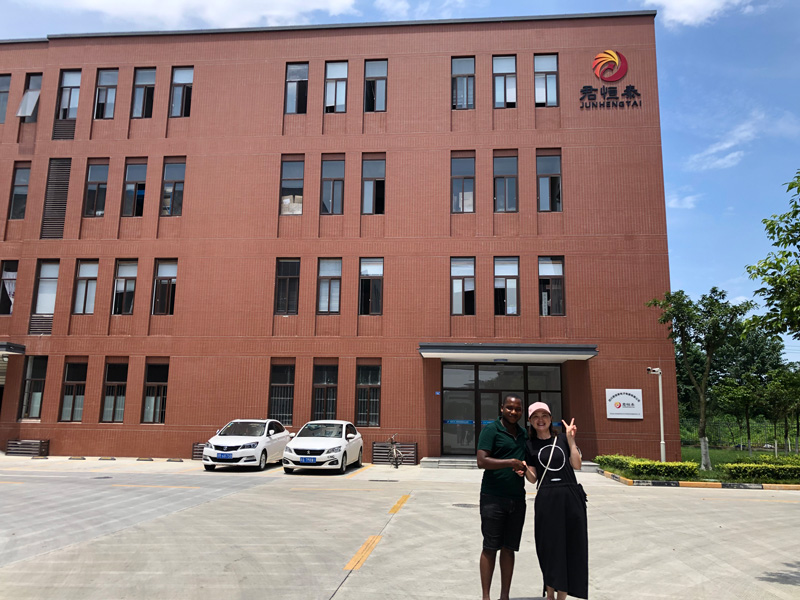
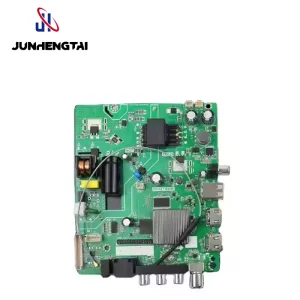
Founded in 2005 and headquartered in Chengdu, Sichuan Province, China, Sichuan Junhengtai Electronic Appliance Co., Ltd. has developed into a premier manufacturer of high-quality electronics parts, LCD TV motherboards, power modules, and specialized satellite reception systems. Over nearly two decades, we have optimized our supply chains to supply developing markets in Southeast Asia and Africa, earning a stellar reputation in South Sudan for hardware durability.
Our philosophy is built on three pillars: "Integrity, Perseverance, and Steady Development." As a specialized KU LNB manufacturer, we run advanced Surface Mount Technology (SMT) assembly lines and climate chamber stress-testing facilities. Our products comply with CE, FCC, and RoHS guidelines, assuring our global partners that they are receiving robust, industrial-grade equipment.
Broadcasting to remote areas in Africa relies heavily on the Ku-band, which uses frequencies from 10.7 GHz to 12.75 GHz. Receiving these ultra-high frequencies requires hardware with precise tolerances. Our engineering focus centers on solving three major challenges that lead to LNB failures in the field:
Standard LNB local oscillators drift due to temperature swings, causing signal loss. Junhengtai utilizes high-precision Phase-Locked Loop (PLL) circuits to maintain frequency stability within ±150 kHz, even when temperatures cycle from 0°C at night to 45°C during the day.
Heavy tropical downpours cause "rain fade," attenuating satellite microwave signals. Our LNBs feature an ultra-low noise figure (down to 0.1dB nominal), maximizing the carrier-to-noise ratio (C/N) so that picture stability is maintained during severe weather.
High UV indices and airborne dust quickly crack standard plastic feedhorn caps, allowing moisture ingress. Junhengtai uses UV-stabilized polycarbonates and hermetically sealed zinc alloy casings with rubberized weather-boots to prevent water intrusion.
For B2B buyers, distributors, and NGO purchasing agents managing infrastructure projects in Juba, procurement is not just about unit price; it is about supply chain predictability. Sichuan Junhengtai operates a vertically integrated factory. By keeping assembly, testing, and component manufacturing in-house, we protect our production capacity from raw-material supply shocks.
Our Quality Management System complies with ISO9001 guidelines, and every batch of LNBs undergoes automatic optical inspection (AOI), high-frequency spectrum analysis, and temperature-cycling tests. With direct logistic pipelines linking our Chengdu plant to major coastal ports, we offer shipping options through the Port of Mombasa (Kenya) and overland via Kampala, delivering reliable products directly to South Sudanese distributors.
Explore our comprehensive range of high-efficiency LNBs, control boards, and satellite-adjacent components customized for regional distribution channels.
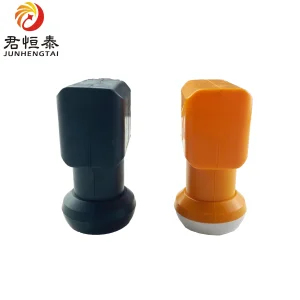
In outlying areas such as Malakal, Bentiu, and the Greater Pibor Administrative Area, NGOs and international aid organizations depend on high-uptime networks to coordinate relief operations. Since local telecom towers are often down, satellite VSAT and Ku-band downlink configurations provide critical news, weather, and administrative feeds. Junhengtai’s LNB models are built to integrate seamlessly with standard commercial satellite receivers, helping maintain essential communication channels.
The South Sudanese Ministry of Information and international development agencies run broadcast programs to deliver educational content to schools and community centers outside of Juba. These centers rely on solar panel systems paired with local batteries. Because our LNBs feature efficient circuitry (typically using less than 100mA of power), they reduce the electrical draw on solar arrays, ensuring longer operation during evening hours.
In residential areas in Juba, domestic pay-TV and Free-To-Air (FTA) systems are popular entertainment options. Multi-feed and dual-polarization LNBs enable single-dish setups to supply signals to several apartments or adjacent homes. Using one LNB with multiple cord configurations (such as our Twin or Quad LNB series) reduces hardware expenses for local installation providers.
Technical considerations, logistical paths, and product specification answers direct from our engineering desk.
Dielectric Resonator Oscillator (DRO) LNBs rely on a small ceramic puck to keep their frequency stable, but this component is sensitive to physical vibration and extreme changes in temperature. In South Sudan, where midday temperatures can exceed 40°C, DRO local oscillators often drift, causing digital TV channels to pixelate or drop out completely. Phase-Locked Loop (PLL) LNBs, like the ones produced at our Chengdu factory, lock their local oscillator frequency to a highly stable crystal reference. This setup ensures that your signal remains locked in place, regardless of temperature fluctuations.
Rain fade happens when heavy rainfall absorbs and scatters high-frequency Ku-band satellite signals. To counter this, we design our LNB feedhorns for high gain and keep the internal noise figures extremely low (0.1dB to 0.2dB). This design gives satellite receivers a higher Signal-to-Noise Ratio (SNR), providing extra margin to keep the connection active even during heavy storms in Juba or Wau.
Most bulk orders travel by sea from Chinese ports (such as Shanghai or Shenzhen) to the Port of Mombasa in Kenya or the Port of Dar es Salaam in Tanzania. This sea leg usually takes between 25 and 30 days. From there, cargo is transported overland via Kampala, Uganda, directly to Juba, which takes an additional 7 to 14 days, depending on road conditions. For urgent, smaller shipments of testing units, prototypes, or replacement parts, we also offer air freight services from Chengdu Shuangliu International Airport.
Yes, all of our universal Ku-band LNBs feature voltage-controlled polarization switching. Applying 13V DC switches the LNB to vertical polarization, while 18V DC switches it to horizontal polarization. They also feature a 22kHz tone switch to transition between high and low bands. This full-band coverage ensures compatibility with major African satellite platforms, including DStv, Canal+ Afrique, and Eutelsat feeds.
As a direct manufacturer, we offer extensive customization. Buyers can choose their preferred plastic shell material, custom color branding, specific local oscillator frequencies (like 9.75, 10.6, 10.75, or 11.3 GHz), gain levels (ranging from 55dB to 65dB), and connector finishes (gold or nickel plating). We can also apply your brand logo to the housing and design custom retail packaging to match your local market strategy.
Get in touch with our Chengdu-based technical sales team to request pricing catalogs, engineering documentation, or customized product samples.
 Junhengtai Electronic