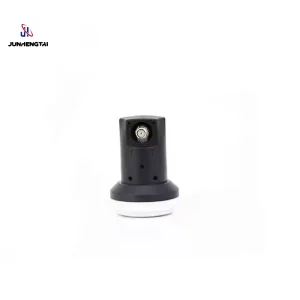
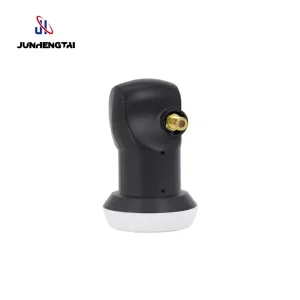
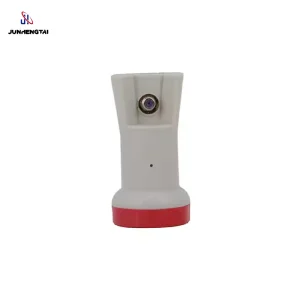
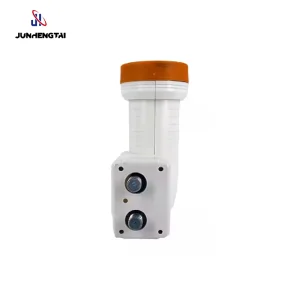
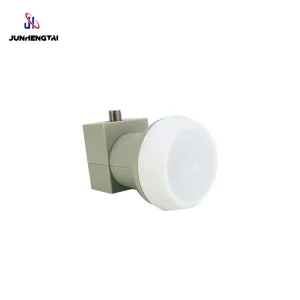
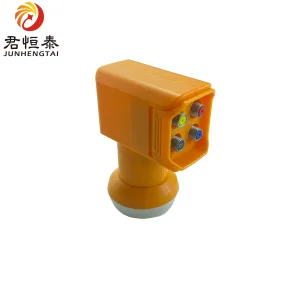
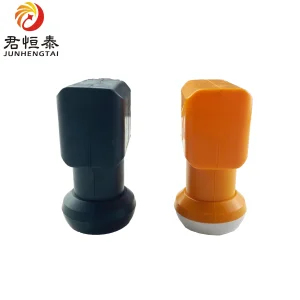
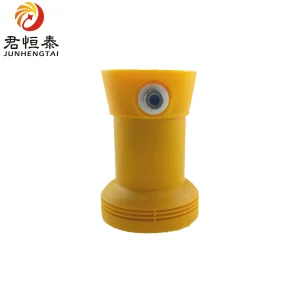
Premium RF downconverters optimized for high signal integrity, noise suppression, and resilience against tropical atmospheric attenuation.
The telecommunications infrastructure in the Central African Republic (CAR), particularly in regions outside of the capital city Bangui, depends heavily on satellite communications. Due to landlocked geography, vast dense rainforest canopies, and limited fiber-optic terrestrial backbones, Ku-band satellite downlink signals act as the vital bridge for digital TV broadcasting (DTH - Direct-to-Home), rural internet backhaul, and community telecommunications hubs.
However, importing and deploying RF reception equipment in Sub-Saharan environments presents unique challenges. The local climate is marked by intense seasonal rainfall (causing significant rain fade at Ku-band frequencies) and high thermal variations. Sourcing managers and local telecommunications authorities require Ku-band LNBs with a low noise figure (under 0.3 dB), exceptional Local Oscillator (LO) stability (within ±1.5 MHz), and robust IP67 weather-proofing to prevent water ingress and thermal drift.
Established Year
Quality Standard
Exporting Countries
Noise Figure Range
As a prominent player in Chengdu, Sichuan, China's high-tech manufacturing corridor, Sichuan Junhengtai Electronic Appliance Co., Ltd. leverages state-of-the-art Industry 4.0 automation. Our manufacturing facilities utilize high-speed Surface Mount Technology (SMT) assembly lines and computerized radio-frequency (RF) calibration testing equipment. This ensures that every Ku-band LNB leaving our factory meets precise gain and phase noise parameters, mitigating signal dropouts in remote regions of CAR.
Precision placement of high-frequency RF components ensures ultra-low noise figures and minimizes mechanical failure points in high-temperature sub-Saharan climates.
Every single unit undergoes phase noise, gain flatness, and spectrum analysis testing to guarantee zero-defect shipments arriving at African ports.
Our raw material integration in Sichuan allows us to offer competitive factory-direct pricing, fast production turnaround, and resilient shipping coordination to transit routes like the Douala port corridor.
For B2B buyers, importing satellite equipment requires navigating long transit times and customs procedures. By partnering with an ISO9001, CE, and FCC certified factory, distributors in the Central African Republic receive certified hardware, complete customs documentation, and durable packaging designed for long-distance maritime and overland transport.
Delivering high-quality electronic components and satellite reception accessories since 2005.
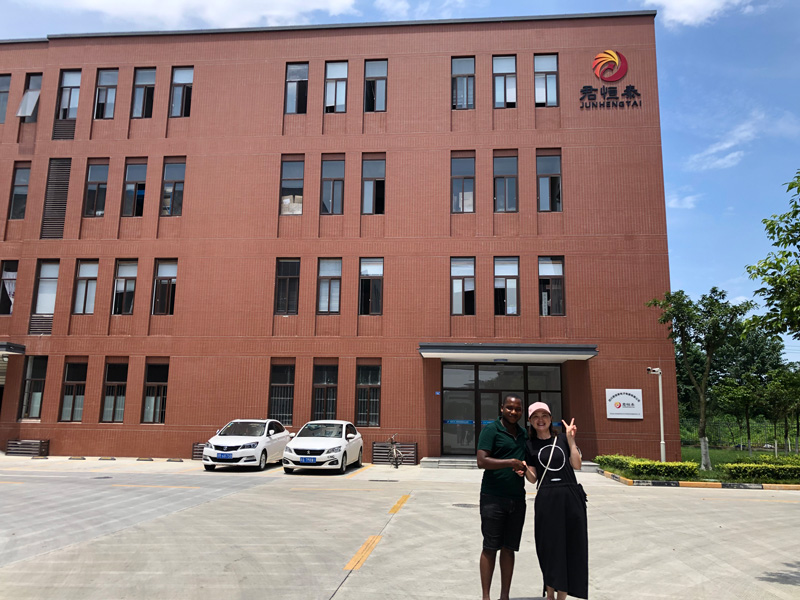
Sichuan Junhengtai Electronic Appliance Co., Ltd. was established in 2005 and is located in Chengdu, Sichuan Province, China. It is an enterprise focusing on the production and sales of LCD TV accessories and home appliance accessories. The company warmly welcomes customers at home and abroad to cooperate with us and create a better future together, and is committed to providing customers with high-quality, cost-effective products, excellent product quality, and reasonable prices. The company continues to innovate and improve products and services to meet customer needs and market changes.
What We Do: Since its establishment, the company has adhered to the business philosophy of "Integrity, Perseverance and Steady development". With years of accumulated technics and experiences, high-standard quality management system, excellent marketing ability and perfect after-sales service system, it has won high accolades from the customers. Exports to hundreds of countries, the main address for Southeast Asian countries and African countries, such as India, Bangladesh, Indonesia, Cameroon, Central African Republic, and so on. In the future, we will continue to enrich our products, improve the quality of our products and services, and optimize supply chain costs to meet the needs of our customers.
The company has a professional R&D team and after-sales service team, which can provide professional technical support and services.
The company has formed a good communication mechanism with customers, and can respond to customers' needs and questions in a timely manner.
The company strictly follows the ISO9001 international quality management standard for production and quality control to ensure product quality.
Our product line includes various types of products such as power modules, LED TV motherboards, and LED drive power supplies, which can meet the needs of different customers.
Our products adopt high-quality materials and advanced production technology, and have the advantages of high efficiency, low power consumption, and high stability.
The company's products have passed a number of certifications, such as CE, FCC, etc., and can operate stably in various environments and usage occasions.
Ku-Band LNBs are utilized in various critical sectors across the Central African Republic to ensure communications stability:
Technical insights to help procurement managers and network engineers select the optimal LNB models.
Explore our full range of satellite receiver LNBs, power modules, LED backlight strips, and TV components engineered for distribution and OEM manufacturing.
 Junhengtai Electronic